
Why Piping Design Is Important in Oil & Gas and Process Industries
Enquiry Now
Most people outside engineering have no idea what a piping engineer actually does. It’s not a field that gets talked about much, but go into any refinery or offshore rig and you’ll notice how much depends on the piping system being designed properly. Fluids, gases, chemicals — all of it moves through pipes that someone had to plan out carefully, down to the smallest fitting.
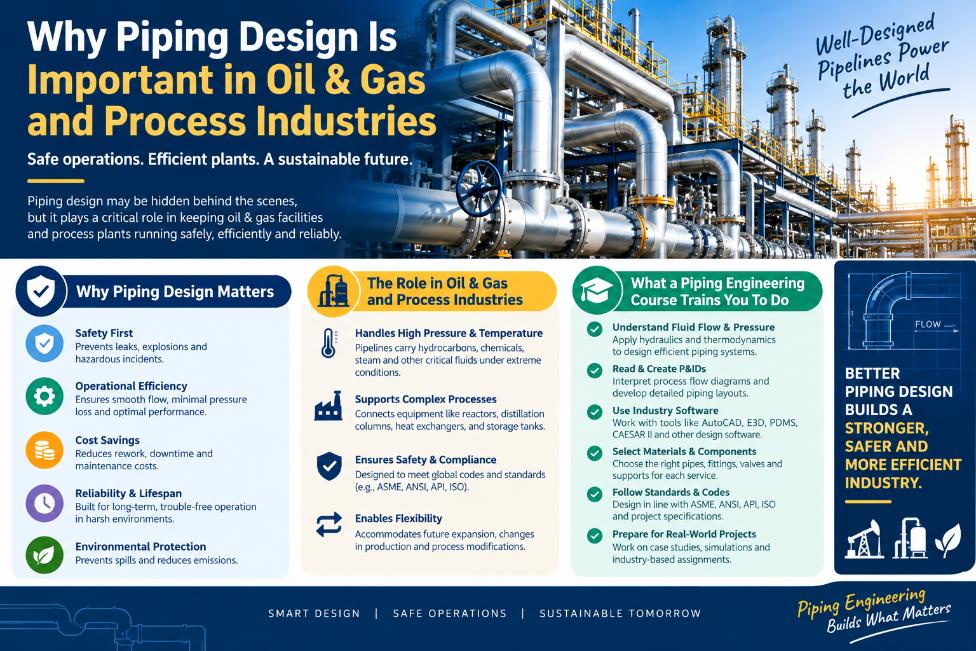
Piping design decides how everything in a plant is connected physically. Pressure ratings, temperature limits, flow paths, support structures, material compatibility — all of that gets worked out at the design stage. A mistake here doesn’t just cause inefficiency. It can mean leaks, equipment failure, or worse, depending on what’s flowing through those lines.
Oil & gas facilities work with dangerous materials on a daily basis. Flammable gases, corrosive substances, high pressure steam. There isn’t much space for error in this environment, which is why companies are picky about who they bring on for piping roles. They want people who already understand layouts, stress analysis, material selection and the codes that govern piping work internationally. Not fresh theory. Working knowledge.
What Gets Covered in a Piping Engineering Course
A course built around this field usually walks through:
Piping layout and design basics. Reading and working with P&IDs. Stress analysis. Material selection. International codes and standards used across the industry. Exposure to how EPC (Engineering, Procurement, Construction) companies function on actual projects. And ideally, hands-on project work instead of pure classroom lectures.
The goal isn’t a certificate at the end. It’s being able to walk onto a project and actually contribute — read drawings, understand what’s expected of you, and not need three months of hand-holding before you’re useful.
Where This Training Actually Leads
Institutes that pair experienced trainers with live project exposure tend to produce engineers who get hired quickly. This shows up consistently — people going through structured piping training end up placed in EPC firms, offshore project companies, and engineering consultancies across the industry.
That’s not really luck. If the course content matches what companies actually need on the ground, graduates come in already familiar with how the work is done. Discipline, understanding of deliverables, comfort with real project documents.
Roles that piping engineers typically move into include:
Layout and routing design work. Piping stress analysis. Material take-off (MTO) preparation. Isometric drawing checks. Project engineering positions inside EPC companies. Onshore and offshore oil & gas projects.
Piping work isn’t limited to oil & gas either. Chemical plants, water treatment facilities, power projects — all of them need piping engineers, which keeps demand fairly steady even when one sector slows down.
Discipline Matters as Much as Technical Skill
A pattern that comes up a lot with people who’ve been through piping training programs is how much focus goes into punctuality, discipline, and work attitude, not just technical content. In an industry where a small design error can cause major downstream problems, that discipline ends up mattering just as much as knowing how to draw a pipe route correctly.
It’s not only about technical drawing skills. It’s understanding why following codes and documentation properly actually protects people and equipment once the plant is running.
Final Thoughts
Piping design doesn’t get much attention compared to other engineering fields, but very little in oil & gas or process industries works without it. Every refinery, every offshore platform, every chemical plant depends on piping systems being designed correctly and safely.
For anyone looking for a technical career tied directly to real industrial infrastructure, piping engineering is worth considering. Solid training, combined with actual project exposure, tends to open doors into some of the more stable parts of the engineering job market.


