Mechanical Design of Process Equipments

Process equipment design Program is unique, which discusses all the following items in a single course. It begins by discussing the fundamentals of material selection for process plant applications/simulation & mechanical design of equipments.
  • 25+ Years EPC Industry Expert Trainer with real project execution experience
  • Complete Lifecycle Coverage – From FEED to Commissioning
  • Hands-on Training with Real Engineering Deliverables (SLD, Load List, Design Basis,
    Layouts)
  • Master Electrical Design Calculations – Transformer, DG, Cable, Earthing & Lighting
  • Practical Exposure to HV/LV Switchgear, Substations & Protection Systems
  • International Codes & Industry Best Practices Based Learning
  • Vendor Drawing Review, FAT & Inspection Readiness
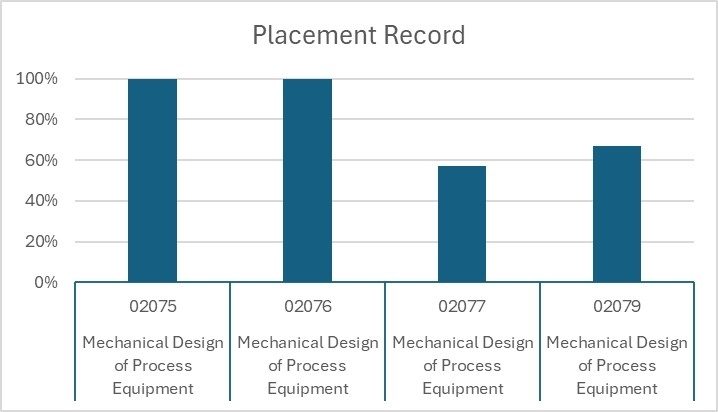
  • 100% Placement Assistance & Career Support.
Electrical System Design focuses on the planning, analysis, and engineering of power
distribution systems for industrial plants, commercial buildings, substations, and
infrastructure projects. The course covers equipment selection, sizing calculations,
protection systems, layouts, and preparation of key engineering documents such as SLDs
and load lists.

It emphasizes safe, reliable, and efficient power distribution in compliance with
international standards and industry practices. Participants gain practical knowledge of
transformers, switchgear, cables, DG systems, UPS, earthing, and automation.

The program also develops skills in cost optimization, energy efficiency, renewable
integration, and scalable system design — preparing engineers for real-time EPC project
execution.

Fresh/ Experienced - Diploma/ Degree Mechanical / Production Engineers.

MODULE 1 – Introduction to Process Industry & Equipment
1. Process Industry Overview
  • Upstream, Midstream & Downstream sectors
    (Oil & Gas, Petrochemical, Chemical, Fertilizer, Steel, Power, Pharma, Food, Water, etc.)
  • Function and role of a Chemical Process Engineer
2. Project Life Cycle & Engineer’s Role
  • Phases of project execution
  • Role of process engineer in each phase
  • Interdisciplinary coordination
3. Process Engineering Deliverables
  • Key deliverables and their users
  • Interface requirements across disciplines
  • Impact during project stages
4. Equipment Fundamentals
  • Difference between Process Equipment & Utility Equipment
5. Static Equipment
  • Storage Tanks
  • Heat Exchangers
  • Reactors
  • Distillation Columns
  • Separators
  • Accumulators
6. Rotating Equipment
  • Pumps
  • Compressors
  • Turbines
  • Blowers
7. Package Equipment
  • Boilers
  • Chillers
  • Cooling Towers
  • Nitrogen Plants
8. Valves, Instruments & Interlocks
9. Equipment Layout & Plot Plan
  • Equipment layout guidelines
  • Industrial standards
  • Plot plan preparation
  • Equipment tagging philosophy
MODULE 2 – Basic Engineering & FEED Introduction
1. ITB, BEP & FEED Preparation
  • Process research & development
  • Safety procedures
  • Manufacturing process optimization
  • Cost estimation
  • Environmental & compliance checks
2. Proposal Engineering
  • Review of ITB documents
  • Technical queries
  • Techno-commercial evaluation
  • Man-hour estimation
3. Design Verification & Simulation
  • Use of simulation tools (HYSYS, PIPESIM)
  • Heat & mass balance validation
  • Scope of supply analysis
  • FEED document evaluation
4. Engineering Planning
  • Scope definition
  • Deliverable identification
  • Manpower planning
  • Scheduling
5. Process Design Basis & Equipment Specifications
  • Process design basis development
  • Bid & purchase specifications
  • Deliverable generation
MODULE 3 – Pre-FEED (Conceptual & Preliminary Design)
3.1 Identification Phase
  • Process option screening
  • Safety & operability evaluation
  • Economic feasibility
  • Block Flow Diagrams (BFD)
  • Preliminary cost estimation
  • Risk identification
3.2 Selection & Evaluation Phase
Key Deliverables:
  • Preliminary Process Design Basis
  • Heat & Material Balance
  • Process Flow Diagrams (PFDs)
  • Equipment List
  • Utility Requirement
  • Raw Material Requirement
  • Preliminary Capex & Opex
  • Risk Summary
MODULE 4 – FEED / Basic Engineering Package (BEP)
4.1 Process Design Package
Key Inputs:
  • Raw material specifications
  • Product specifications
  • Plant capacity
  • Utility availability
  • Regulatory requirements
Core Deliverables:
  • Process Design Basis
  • Material & Energy Balance (M&EB)
  • Process Flow Diagrams (PFDs)
  • Utility Flow Diagrams (UFDs)
  • Piping & Instrumentation Diagrams (P&IDs)
  • Process Control Philosophy
  • Line List & Equipment List
  • Equipment & Instrument Datasheets
  • Hydraulic Design Reports
4.2 Detailed Process Design Package
Advanced Deliverables:
  • General Arrangement Drawings
  • Budgetary Vendor Inputs
  • Relief System Design & Datasheets
  • Material Selection Diagrams (MSD)
  • Tie-in List & Specialty Items
  • Preliminary SLD & Power Identification
  • Storage & Handling Requirements
  • Effluent & Emission Summary
  • Risk Analysis (PHA / HAZOP)
  • Preliminary Operating Procedures
  • QC & Sampling Plan
  • Project Schedule
MODULE 5 – Process Optimization & Scale-Up
1. Process Scale-Up Methodology
  • Lab to Commercial migration
  • Simulation modeling
  • Heat & Material Balance validation
  • Hydraulic & pressure drop studies
  • Environmental & economic feasibility
2. Brownfield Projects
  • Revamp of existing plants
  • Equipment addition & modification
3. Greenfield Projects
  • Grassroot plant development
  • Complete system design
MODULE 6 – Process Modelling & Advanced Calculations
  • Detailed Mass & Energy Balances
  • Unit Operation Design & Evaluation
  • Piping Hydraulics Calculations
  • Relief & Flare System Design
  • Heat Exchanger Design & Performance Evaluation
  • To develop strong fundamentals in process design from Pre-FEED to Detailed           Engineering stages.
  • To enhance the ability to create and interpret key engineering deliverables such as BFD, PFD, P&ID, and Material & Energy Balances.
  • To strengthen skills in equipment selection, sizing, utility estimation, and process optimization.
  • To promote economically feasible and environmentally sustainable process development.
  • To build competency in safety analysis, risk assessment (HAZOP/PHA), and regulatory compliance.
  • To prepare engineers for effective performance in EPC project environments with strong interdisciplinary coordination skills.
  •  

Schedule Your Enquiry

Let's discuss your career goals and help you understand the right path in EPC & Oil & Gas. Get guidance on:

  • SIT Courses & Training Programs
  • Career opportunities in EPC & Oil & Gas
  • Suitable engineering disciplines & career paths
  • Industry skills & software
  • Your next career step

Choose a convenient date & time to speak with us.

Schedule Now →

Suvidya Institute of Technology

Building EPC Engineering Careers Since 2002

Mechanical Design of Process Equipment

FAQ's

What is the Mechanical Design of Process Equipment?
The Mechanical Design of Process Equipment course focuses on the principles and techniques involved in designing various types of process equipment used in industries such as chemical, oil and gas, pharmaceuticals, food and beverage, and more. It covers topics like pressure vessel design, heat exchanger design, storage tank design, piping design, and mechanical integrity.
What are the career prospects for professionals with expertise in Mechanical Design of Process Equipment?
Professionals with expertise in Mechanical Design of Process Equipment have various career opportunities in industries involved in process equipment manufacturing, plant engineering, construction, and maintenance. They can work as mechanical design engineers, equipment engineers, project engineers, consultants, or in related roles.
What job opportunities are available for professionals specializing in Mechanical Design of Process Equipment?
Professionals specializing in the Mechanical Design of Process Equipment have job opportunities in industries such as chemical, oil and gas, pharmaceuticals, food and beverage, and more. Some common job roles include mechanical design engineer, equipment engineer, process engineer, project engineer, consultant, and design coordinator.
How is the job market for professionals specializing in Mechanical Design of Process Equipment?
The job market for professionals specializing in Mechanical Design of Process Equipment can vary based on factors such as industry demand, economic conditions, and geographical location. However, there is generally a demand for skilled professionals in this field, particularly in industries that rely heavily on process equipment.
Are there any placement assistance services provided by SIT?
We have a dedicated Placement cell which continuously seeks for employment opportunities and arranges On-Campus as well as Off-Campus recruitment activities. The institute assists students to enter in their respective industries by providing 100% Placement assistance. The Placement Cell conducts Mock Interviews of students for their preparation for final interviews in the industry.

Testimonials