
How To Become An Expert In Piping Design?
Enquiry Now
The engineering field is moving fast these days, and there are big investments going into oil and gas,
petrochemicals, power generation, pharmaceuticals, water treatment, plus infrastructure projects. In the end, almost
every industrial plant relies on piping systems that are engineered right, because they move fluids, vapors, gases,
and chemicals in a safe way. That rising need is also bringing fresh, kinda interesting career openings for people
who really get piping systems, plant layouts, engineering standards, and those modern design software tools.
Still, a lot of
students and even working folks get a bit mixed up between a piping design course and a piping
engineering course. Both are connected, but they teach different responsibilities that you’ll handle on industrial
jobs. Picking the right program can change your career path in a real way, including salary growth, job chances, and
overall momentum.
So if you’re
searching for a comprehensive piping engineering course
in Mumbai, first understanding these differences is basically the key step before you decide.
Understanding Piping Engineering
Piping
engineering is a specific part of mechanical engineering, it mainly deals with designing, analyzing, building, and
also maintaining piping systems across industrial plants. These pipe networks carry liquids, gases, chemicals,
steam, and other process materials, and they must be managed for safety, efficiency, and compliance with well-known
international engineering standards.
A piping
engineer looks at the whole piping network, not just the drawings. This includes choosing materials, doing pressure
calculations, connecting equipment, performing stress analysis, working on plant layout decisions, following safety
rules, and coordinating within the project team. Their output affects how reliable the plant runs, plus how smoothly
operations work during real usage.
Refineries,
petrochemical facilities, pharmaceutical manufacturing units, power plants, offshore facilities, food processing
industries, and chemical processing companies all depend on skilled piping engineers to execute complex engineering
projects properly. Also, modern piping engineering typically blends advanced software, international codes, and
cross-discipline teamwork, so plant designs come out efficient and practical.
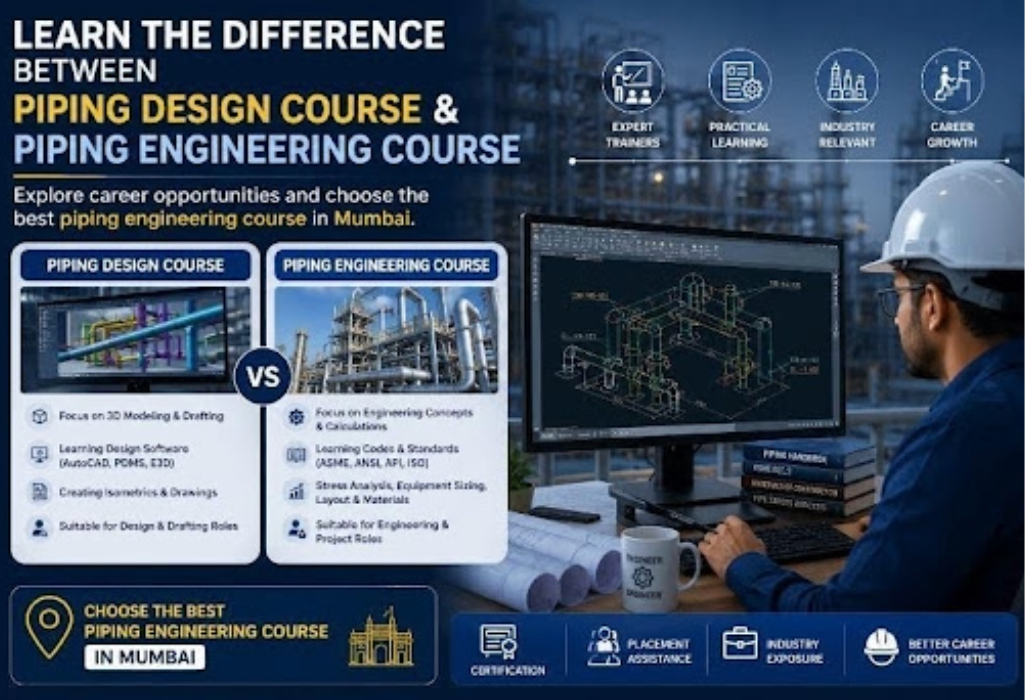
What is a Piping Design Course?
A piping design
course usually focuses more on drafting, layout, and 3D modeling of industrial piping systems. Students learn to
prepare engineering drawings, piping layouts, isometric drawings, equipment layouts, and construction-ready
documentation using CAD and plant design software.
The course is
mostly about hands-on abilities, so learners can produce clean, accurate engineering drawings that fabrication
teams, construction engineers, and project managers can actually use. Students also get familiar with piping parts,
valves, fittings, supports, and general drafting expectations used in industry.
Most piping
designers then work closely with piping engineers, turning engineering ideas into detailed technical drawings, so
those designs can be built on site.
A good piping
design program normally includes training in software applications, plant layout development, piping routing,
equipment positioning, drafting basics, plus documentation standards used in the field.
What Does a Piping Engineering Course Cover?
A well-rounded
piping engineering course goes beyond drafting and actually introduces students to the full engineering journey of
industrial piping systems. It mixes theory with practical application, helping students handle real engineering
issues instead of only diagrams.
Typically,
students study fluid mechanics, process engineering basics, piping materials, international design codes, stress
analysis methods, equipment engineering concepts, project documentation processes, plant layout engineering, quality
expectations, safety regulations, and engineering calculations.
The curriculum
usually also introduces industry-standard software tools used by engineering organizations worldwide. Many
institutes add practical assignments, case studies, and live engineering tasks, so students get exposure before they
step into work roles.
A professionally
structured program also strengthens communication skills, project coordination ability, and engineering
documentation practices. These are very important when you join EPC companies and larger multinational teams.
Major Differences Between Piping Design and Piping Engineering
Even though both
areas collaborate on industrial projects, their roles are not the same. A piping designer is mostly responsible for
making detailed engineering drawings and plant layouts using specialized software. Their attention stays on drafting
accuracy, how components are placed, routing decisions, and keeping documentation organized.
A piping
engineer, however, handles the larger engineering side of the piping system. This involves choosing suitable
materials, working out pressure losses, confirming code compliance, doing stress analysis, coordinating with
different engineering groups, and checking that the design satisfies operational needs plus safety requirements.
In a simple way,
designers create the visual representation, while engineers make the technical choices that help the system function
well over its entire lifecycle. Many people start with a piping design background, then later improve their
expertise through a piping engineering course, so they can access higher-level engineering roles.
Why Mumbai is an Ideal Destination for Piping Engineering Education
Mumbai is known
for being one of India’s top industrial and engineering centers. The city is filled with EPC firms, consulting
organizations, petrochemical industries, refineries, offshore engineering groups, and multinational companies
focused on process plant engineering.
Because this
industrial ecosystem is strong, joining a piping engineering course in Mumbai can give students more exposure to
real industry practices. You also tend to get experienced faculty, networking possibilities, internship visibility,
and placement assistance. So overall, if you want a solid foundation and better career direction, Mumbai is a pretty
sensible place to begin.
Why does practical training really matter
Nowadays,
engineering employers often want people who can join a project team and start contributing right away. Practical
training helps students grasp engineering paperwork, day to day software applications, project flows, cross
discipline teamwork, and industrial norms before they even enter the workplace.
When learners
work on live engineering projects, they get to feel the actual, real-life difficulties. Like designing piping
systems for complicated industrial facilities. They also start to know how project schedules work, how engineering
reviews are handled, why design revisions happen, what quality requirements demand, and what clients expect ,
sometimes under tight timeframes too.
That kind of
hands-on exposure usually builds confidence, and it also lowers the learning curve during the first phase of
employment. Also, institutes that mix classroom teaching with project based learning tend to produce graduates who
are more ready for competitive engineering careers.
Build a Successful Engineering Career
Industrial
growth in India, and even in international markets, keeps creating solid demand for capable piping specialists.
Whether you want to work in refineries, power plants, pharmaceutical environments, EPC organizations, or bigger
global engineering companies, choosing the right technical education can lead to long term opportunities.
If your plan
goes beyond just drafting, and you want to take part in the full engineering project development, then joining a
complete piping engineering course can be a smart investment. Students who want good technical education, practical
exposure, and helpful industry connections, should look for a credible piping engineering course in Mumbai that
merges theoretical learning with real-world work style.
Institutes like
Suvidya have designed their programs in a more industry aligned way, including a curriculum that fits current needs,
experienced trainers , software exposure, live project opportunities, and placement support, so aspiring engineers
can gain the know-how and confidence they need to succeed in today’s competitive engineering sector.
Conclusion
The industrial
sector keeps expanding, there are new opportunities in oil and gas, petrochemicals, power generation,
pharmaceuticals, and infrastructure and honestly that makes piping professionals super in demand. Whether you pick a
piping design course to build know-how in drafting, plus plant layouts, or you go for a piping engineering course to
get a wider grasp of design, analysis, and how projects get executed, both ways can still feel rewarding. If you are
looking for industry-focused training, hands-on exposure, and good placement support, enrolling in a piping
engineering course in Mumbai can help you get the skills and confidence you need for a strong engineering career in
India as well as abroad.
Frequently Asked Questions (FAQs)
1. What is the difference between a piping design course and a piping engineering course?A piping design
course usually concentrates on drafting, plant layouts, and creating engineering drawings using CAD software. A
piping engineering course instead, takes on the full engineering process, so it typically covers design concepts,
material selection, stress analysis, safety standards, and project execution.
2. Who can enroll in a piping engineering course?
Mechanical,
chemical, production, and civil engineering graduates or diploma holders are generally eligible. Some institutes
also allow final-year students, and even working professionals who want to upgrade their skill level a bit, for
sure.
3. Why should I choose a piping engineering course in Mumbai?
Mumbai has many
EPC companies, engineering consultancies, refineries and industrial organizations, so there’s constant learning and
real exposure. Studying here gives you better industry reach, stronger networking chances, faculty that actually
works in the space, and often improved placement odds.
4. What career opportunities are available after completing a piping engineering
course?
After finishing
a piping engineering course, people can move into roles like piping engineer, piping designer, plant layout
engineer, CAD engineer, project engineer, stress engineer, construction engineer, and design coordinator. These opportunities show up across oil and gas, power, pharmaceuticals, petrochemicals, and manufacturing.
5. Is software training included in a piping design course?
Yes, most
professional piping design courses include training on industry-standard CAD tools and plant design software, so students can prepare engineering drawings and piping layouts that match real industrial requirements.
6. What skills will I learn during a piping engineering course?
You build
understanding of piping systems, engineering calculations, material specifications, plant layouts, international
codes and standards, project documentation, engineering software, and also safety practices. Plus, you sharpen your
analytical thinking and problem-solving ability along the way.
7. Is a piping engineering course a good career choice?
Definitely,
because industrial development plus infrastructure projects keep growing across the world. So skilled piping
engineers stay in demand across multiple sectors, which means steadier career progress, competitive salaries, and
chances to work on big scale engineering projects, where you learn a lot fast.


