
Mastering MEP: Your Comprehensive Guide to MEP Course in Mumbai
Enquiry Now
Modern buildings are getting more advanced , efficient and tech driven, well
you know. Behind every well-designed commercial building, residential complex,
hospital, industrial facility and infrastructure project, there is usually a
team of professionals who handle essential building systems , kind of the
unseen backbone. Those systems include mechanical, electrical, and plumbing
services, often said as MEP.
For people in engineering and architecture, learning how these systems are
designed, coordinated and then actually installed, can open the door to
several kinds of career chances. A good organized MEP course gives students
not only the technical understanding, but also hands-on abilities needed to
grasp building services and work smoothly on real world assignments.
What Is MEP?
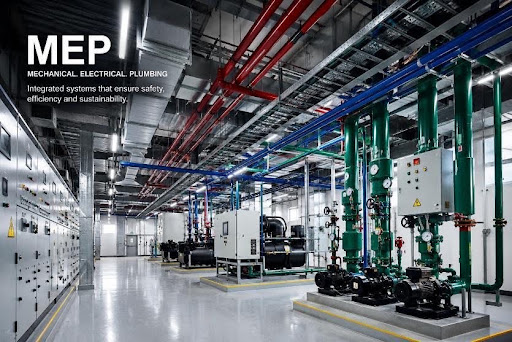
MEP means Mechanical, Electrical, and Plumbing. I mean, those three
disciplines are a kind of essential chunk in building design and construction;
you could say they are all tied together in practice.
Mechanical systems usually cover heating along with ventilation and
air-conditioning needs. Electrical systems handle power distribution,
illumination, electrical safety, and other installation-related work. Plumbing
systems are about water supply, drainage, sanitation, and that broader
category of plumbing services too.
MEP design kind of pulls these systems together so they can work efficiently,
and so they don’t clash with architectural or structural components. Also,
modern construction projects are usually complex, with coordination between
multiple teams all the time, so trained MEP professionals are often in demand
across different sectors.
Why Choose an MEP Course in Mumbai?
Mumbai is one of India’s major centres for construction, real estate,
infrastructure, commercial development, and engineering services. The city has
numerous residential towers, corporate offices, hotels, hospitals, malls,
industrial facilities, and infrastructure projects.
This creates a strong environment for professionals interested in building
services and construction-related careers. An MEP course in Mumbai can help
learners develop industry-relevant knowledge while gaining exposure to the
requirements of modern construction projects.
Training in a major commercial city can also provide opportunities to
understand current industry practices, project workflows, and the software
used by engineering and design professionals.
What Does an MEP Course Cover?
The curriculum can vary depending on the institute and specialization, but
comprehensive MEP courses generally cover the fundamentals of mechanical,
electrical, and plumbing systems.
The mechanical component may introduce learners to HVAC systems, ventilation,
air-conditioning principles, equipment selection, ducting, and cooling
requirements. Students can learn how these systems are planned according to
building requirements.
The electrical component can cover electrical layouts, power distribution,
lighting systems, load calculations, electrical safety, and equipment
requirements. Understanding electrical drawings and coordination is an
important part of the learning process.
The plumbing component typically covers water supply systems, drainage
networks, sanitary installations, piping layouts, and related building
services.
Together, these areas provide a foundation for understanding how different
building systems operate as part of one coordinated project.
Importance of MEP Design Software
Modern MEP projects rely heavily on digital design and engineering tools.
Learning relevant software can therefore be an important part of professional
training.
Depending on the course structure, students may receive exposure to CAD-based
drafting tools, Building Information Modelling platforms, and other software
used for MEP design and coordination.
Software skills allow professionals to prepare detailed drawings, develop
layouts, coordinate systems, identify clashes, and make design modifications
efficiently. Practical software knowledge can therefore complement theoretical
engineering concepts and make learners better prepared for professional
projects.
Benefits of Practical MEP Training
Understanding concepts in a classroom is useful, but practical exposure can
make the learning experience more effective. Students should ideally work on
drawings, layouts, calculations, and project-based exercises during their
training.
Practical assignments can help learners understand how mechanical, electrical,
and plumbing systems are coordinated with architectural and structural plans.
Project-based learning also gives students an opportunity to identify common
design challenges. For example, an electrical installation may need to be
coordinated with an HVAC system, while plumbing routes may need to fit within
limited service spaces.
Learning how to address these coordination requirements can help students
develop a more practical understanding of MEP engineering.
Who Can Pursue an MEP Course?
An MEP program can be suitable for students and professionals from
engineering, architecture, construction, and related technical backgrounds.
Depending on the institute and course level, eligibility requirements may
differ.
Civil, mechanical, electrical, and architectural graduates or diploma holders
may find MEP training particularly relevant to their career interests.
Professionals already working in construction or building services can also
use specialized training to improve their technical knowledge.
Before enrolling, students should check the course curriculum, duration,
practical training, software modules, faculty experience, and certification
offered by the institute.
Career Opportunities After MEP Training
MEP knowledge can support careers across construction, infrastructure, real
estate, facility management, engineering consultancy, and building design.
Depending on their qualifications and specialization, trained professionals
may explore roles such as MEP design engineer, HVAC design professional,
electrical design engineer, plumbing design engineer, BIM professional, MEP
coordinator, or building services engineer.
The actual role and career progression depend on an individual’s educational
background, technical skills, software knowledge, project experience, and
specialization.
Professionals who develop strong coordination and design capabilities can also
work with engineering consultants, contractors, architects, real estate
companies, and infrastructure organizations.
How to Select the Right MEP Training Institute in Mumbai
Choosing the right training provider is an important step. Students should
look beyond course advertisements and evaluate the actual learning structure.
A good MEP training institute in Mumbai should provide a balanced combination
of theory, practical assignments, software training, and project-based
learning. The curriculum should reflect current industry practices rather than
focusing only on basic concepts.
It is also useful to examine whether the trainers have relevant industry
experience. Experienced instructors can provide practical insights into
project coordination, design standards, documentation, and common workplace
challenges.
Students should also understand what certification they will receive and
whether the course offers career guidance or placement support.
Building a Successful Career in MEP
Finishing an MEP certification course can give you a base, but actual
progress, sort of depends on keep learning. Building services tech is always
changing, so people in the field really need to stay current with updated
design methods, newer software, better sustainability practices , and the
latest industry requirements.
Also, having solid communication and coordination skills matters just as much.
MEP professionals often work alongside architects, structural engineers,
contractors, project managers, and a bunch of other specialists. Being able to
grasp what each discipline is doing, and translating design needs in a clear
way, can become quite useful in day to day professional work.
Conclusion
MEP is kinda an important part of modern building design, like it brings
mechanical , electrical, and plumbing systems together in a way that makes the
whole building feel more functional and efficient. For aspiring engineers,
architects, designers, and construction professionals, structured training can
offer a pretty solid base for stepping into this field.
A good MEP courses can blend technical ideas, hands-on tasks , design software
,and learning through actual projects so students can really see how building
services work in the real world. With the right coaching and ongoing skill
growth, people can look into different paths, like construction,
infrastructure, engineering consultancy, and even real estate.
If someone is thinking about a career in building services, checking out
suitable MEP courses in Mumbai can be a practical move, not only to build
specialized technical know how, but also to be ready for what the modern
construction industry usually demands.


