- Home
- Engineering Training Programs
- Process Engineering
Process Engineering
Process Engineering Program is unique. It begins by discussing the design of processes for desired physical and/ or chemical transformation of materials.
- 25+ Years Industry Expert Trainer with real EPC project experience
- Complete Project Lifecycle Coverage – From Pre-FEED to Detailed Engineering
- Strong EPC Industry Exposure & Real-Time Deliverables Training
- Process Optimization & Scale-Up Expertise (Brownfield & Greenfield)
- International Codes, Standards & Modern Engineering Practices
- Interdisciplinary Coordination Skills Development
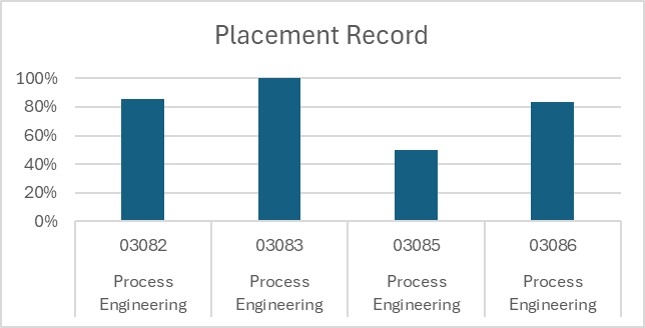
- 100% Placement Assistance & Career Support
This Process Engineering course prepares participants to design and develop efficient industrial processes from Pre-FEED to Detailed Engineering stages. The program covers preparation of BFDs, PFDs, P&IDs, material & energy balances, equipment sizing, and utility calculations. Participants gain exposure to process simulation concepts, safety studies, and EPC project coordination practices.
The course builds strong analytical, technical, and problem-solving skills required to optimize processes, ensure safety and compliance, and deliver high-quality engineering solutions across industries such as Oil & Gas, Petrochemical, Chemical, Power, and allied sectors.
Fresh/ Experienced - Diploma/ Degree in Chemical Engineering
MODULE 1 – Introduction to Process Industry & Equipment
1. Process Industry Overview
- Upstream, Midstream & Downstream sectors(Oil & Gas, Petrochemical, Chemical, Fertilizer, Steel, Power, Pharma, Food, Water, etc.)
- Function and role of a Chemical Process Engineer
2. Project Life Cycle & Engineer’s Role
- Phases of project execution
- Role of process engineer in each phase
- Interdisciplinary coordination
3. Process Engineering Deliverables
- Key deliverables and their users
- Interface requirements across disciplines
- Impact during project stages
4. Equipment Fundamentals
- Difference between Process Equipment & Utility Equipment
5. Static Equipment
- Storage Tanks
- Heat Exchangers
- Reactors
- Distillation Columns
- Separators
- Accumulators
6. Rotating Equipment
- Pumps
- Compressors
- Turbines
- Blowers
7. Package Equipment
- Boilers
- Chillers
- Cooling Towers
- Nitrogen Plants
8. Valves, Instruments & Interlocks
9. Equipment Layout & Plot Plan
- Equipment layout guidelines
- Industrial standards
- Plot plan preparation
- Equipment tagging philosophy
MODULE 2 – Basic Engineering & FEED Introduction
1. ITB, BEP & FEED Preparation
- Process research & development
- Safety procedures
- Manufacturing process optimization
- Cost estimation
- Environmental & compliance checks
2. Proposal Engineering
- Review of ITB documents
- Technical queries
- Techno-commercial evaluation
- Man-hour estimation
3. Design Verification & Simulation
- Use of simulation tools (HYSYS, PIPESIM)
- Heat & mass balance validation
- Scope of supply analysis
- FEED document evaluation
4. Engineering Planning
- Scope definition
- Deliverable identification
- Manpower planning
- Scheduling
5. Process Design Basis & Equipment Specifications
- Process design basis development
- Bid & purchase specifications
- Deliverable generation
MODULE 3 – Pre-FEED (Conceptual & Preliminary Design)
3.1 Identification Phase
- Process option screening
- Safety & operability evaluation
- Economic feasibility
- Block Flow Diagrams (BFD)
- Preliminary cost estimation
- Risk identification
3.2 Selection & Evaluation Phase
Key Deliverables:
- Preliminary Process Design Basis
- Heat & Material Balance
- Process Flow Diagrams (PFDs)
- Equipment List
- Utility Requirement
- Raw Material Requirement
- Preliminary Capex & Opex
- Risk Summary
MODULE 4 – FEED / Basic Engineering Package (BEP)
4.1 Process Design Package
Key Inputs:
- Raw material specifications
- Product specifications
- Plant capacity
- Utility availability
- Regulatory requirements
Core Deliverables:
- Process Design Basis
- Material & Energy Balance (M&EB)
- Process Flow Diagrams (PFDs)
- Utility Flow Diagrams (UFDs)
- Piping & Instrumentation Diagrams (P&IDs)
- Process Control Philosophy
- Line List & Equipment List
- Equipment & Instrument Datasheets
- Hydraulic Design Reports
4.2 Detailed Process Design Package
Advanced Deliverables:
- General Arrangement Drawings
- Budgetary Vendor Inputs
- Relief System Design & Datasheets
- Material Selection Diagrams (MSD)
- Tie-in List & Specialty Items
- Preliminary SLD & Power Identification
- Storage & Handling Requirements
- Effluent & Emission Summary
- Risk Analysis (PHA / HAZOP)
- Preliminary Operating Procedures
- QC & Sampling Plan
- Project Schedule
MODULE 5 – Process Optimization & Scale-Up
1. Process Scale-Up Methodology
- Lab to Commercial migration
- Simulation modeling
- Heat & Material Balance validation
- Hydraulic & pressure drop studies
- Environmental & economic feasibility
2. Brownfield Projects
- Revamp of existing plants
- Equipment addition & modification
3. Greenfield Projects
- Grassroot plant development
- Complete system design
MODULE 6 – Process Modelling & Advanced Calculations
- Detailed Mass & Energy Balances
- Unit Operation Design & Evaluation
- Piping Hydraulics Calculations
- Relief & Flare System Design
- Heat Exchanger Design & Performance Evaluation
- To develop strong fundamentals in process design from Pre-FEED to Detailed Engineering stages.
- To enhance the ability to create and interpret key engineering deliverables such as BFD, PFD, P&ID, and Material & Energy Balances.
- To strengthen skills in equipment selection, sizing, utility estimation, and process optimization.
- To promote economically feasible and environmentally sustainable process
development. - To promote economically feasible and environmentally sustainable process development.
- To build competency in safety analysis, risk assessment (HAZOP/PHA), and
regulatory compliance. - To prepare engineers for effective performance in EPC project environments with strong interdisciplinary coordination skills.
Enquiry Form
Process Engineering
FAQ's
What is process engineering?
Process engineering involves the design, optimization, and operation of industrial processes for the production of various products. It focuses on the development and implementation of efficient and safe processes in industries such as chemical, petrochemical, pharmaceutical, food and beverage, and oil and
gas.
What topics are covered in a process engineering course?
Process engineering courses typically cover subjects such as chemical engineering principles, mass and energy balances, fluid mechanics, heat transfer, chemical reactions and kinetics, process control, process
equipment design, process safety, and process optimization.
What are the career prospects for process engineers?
Process engineers have diverse career pportunities in industries such as chemical manufacturing, oil and gas refining, pharmaceuticals, food and beverage production, environmental engineering, and more. They can work as process engineers, production engineers, plant managers, process control engineers, research
and development specialists, or in related roles.
What job opportunities are available for process engineering graduates?
Process engineering graduates can find job opportunities in a wide range of industries such as chemical manufacturing, oil and gas, pharmaceuticals, food and beverage, environmental engineering, and more. Some common job roles include process engineer, production engineer, plant manager, process control
engineer, research and development specialist, and process safety engineer.
How is the job market for process engineering graduates?
The job market for process engineering graduates can vary based on factors such as industry demand,
economic conditions, and geographical location. However, process engineering is a crucial field in many industries, and there is generally a demand for skilled process engineers.
What skills are employers looking for in process engineering graduates?
Employers typically seek process engineering graduates with strong technical skills in areas such as process design, process optimization, process control, and safety. Additionally, skills in process simulation software,
data analysis, problem-solving, teamwork, communication, and project management are highly valued.
Are there any placement assistance services provided by SIT?
We have a dedicated Placement cell which continuously seeks for employment opportunities and arranges
On-Campus as well as Off-Campus recruitment activities. The institute assists students to enter in their respective industries by providing 100% Placement assistance. The Placement Cell conducts Mock Interviews of students for their preparation for final interviews in the industry.
Testimonials
I have completed my PGD in Piping Engineering from the Suvidhya Institute of Technology (Batch-140).
I feel very gratified that I am part of SIT. The overall experience was very remarkable we were given in-depth knowledge of the subject as well we were thought interpersonal skills. The teachers of the institute are highly skilled and are extremely helpful and always ready to assist you with your doubts. As the world is facing COVID 19 pandemic, the institute didn't pause our training however the whole training was launched online and was as good as the classroom program.
The one thing that inspired me and make SIT distinct from other institutes is their regular Assignment and Tests which keeps students well on track of the subject. If someone is thinking to pursue PGD in Piping Engineering from Suvidhya Institute of Technology I would highly recommend providing he/she must be eager to study the subject. I would like to thanks all faculty of SIT especially Mr.Vasant Mestry Sir for his immense efforts and making us ready for our future endeavours.

Mehmoodkhan Roshankhan DalwaiBatch No.01140,Piping Engineering I feel very gratified that I am part of SIT. The overall experience was very remarkable we were given in-depth knowledge of the subject as well we were thought interpersonal skills. The teachers of the institute are highly skilled and are extremely helpful and always ready to assist you with your doubts. As the world is facing COVID 19 pandemic, the institute didn't pause our training however the whole training was launched online and was as good as the classroom program.
The one thing that inspired me and make SIT distinct from other institutes is their regular Assignment and Tests which keeps students well on track of the subject. If someone is thinking to pursue PGD in Piping Engineering from Suvidhya Institute of Technology I would highly recommend providing he/she must be eager to study the subject. I would like to thanks all faculty of SIT especially Mr.Vasant Mestry Sir for his immense efforts and making us ready for our future endeavours.
I have been completed Piping engineering Course from suvidya Institute (Batch 140). I feel it is the best place to acquire practical industry oriented skills.Our course is designed as per industry need. Assignments which are taken during course are very usefull to experience actual work in industry and that's the speciality of SIT.... Our teaching and non teaching staff are good. In this institute not only therotical but also practical knowledge is shared and which are very helpful to everyone... Even in this covid 19 pandemic topics are covered by online. Our trainer Mr.Vasant Mestry sir is the expert in this field who taught us life skills along with Piping Engineering which helps to turn ourself into a better individual. I feel lucky to be a part of SIT family. Thanks to SIT family...
Auti Omkar Savleram Batch No.01140, Piping Engineering
Previous
Next