
How Mechanical Design Courses Can Catapult Your Career to New Heights - mechanical design courses
Enquiry Now
In today’s pretty competitive industrial space, companies kinda always chasing for people who can take messy ideas and turn them into designs that actually work, you know, the real thing not just theory. Sectors like manufacturing, automotive, construction, aerospace, and product development are big on this. And because of that constant need for sharp technical drawings plus fresh design thinking, “Engineering Design & Drafting” is becoming one of those really valuable career choices for new engineers and other technical folks.
An Engineering Design & Drafting course basically gives students the technical know-how to make detailed engineering drawings, build product concepts, and also back up manufacturing steps. Since more industries are moving toward advanced design software and digital workflows, professionals who can draft and design well are starting to feel less optional and more like a must.
So if you want a solid technical career that keeps opening doors, joining an Engineering Design & Drafting program can help you get ahead in an industry that’s changing fast and not waiting for anyone.
Understanding Engineering Design & Drafting
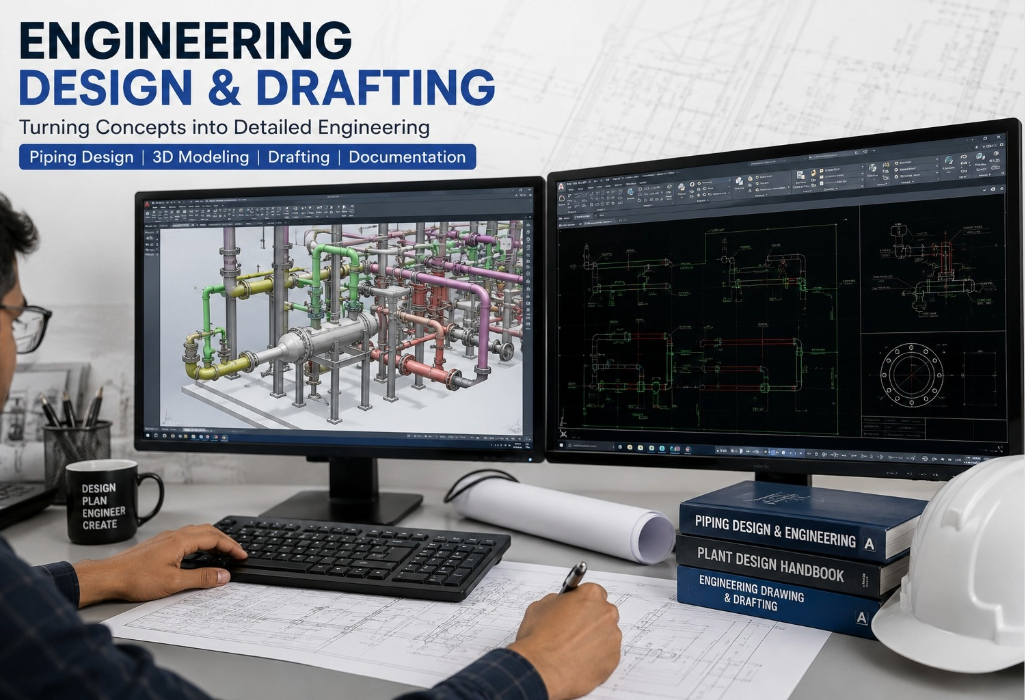
Engineering Design & Drafting is the process of making technical drawings, blueprints, and even digital models that become the starting point for engineering work. Those drawings give the needed specifics, like sizes and materials, production requirements, and how assemblies should be put together.
Engineers and designers depend on drafting methods to pass along ideas clearly, so products, buildings, and systems end up matching exact requirements. Nowadays, drafting is a mix of engineering logic and smart software, meaning professionals can make designs with a lot of accuracy and fine detail.
An Engineering Design & Drafting course will introduce students to both the background ideas and the practical side, so you’re not only reading about it but also learning how to apply it in different engineering areas.
Why Engineering Design Skills Are in High Demand
Things changed a lot with technology. Product creation and system planning now move faster, and many companies are putting money into digital design tools plus computer-aided drafting solutions. The goal is pretty simple: higher efficiency, fewer mistakes, shorter production timelines.
That’s why companies look for people who can create accurate technical paperwork, and also support the product development teams. Engineering design specialists are the key link between a concept and something that’s workable, so they matter across many industries.
Also, modern engineering projects are getting more complicated, which pushes the demand even higher for trained drafting people. Whether you’re dealing with machine components or big infrastructure work, each project needs exact design documentation if it’s going to be executed properly.
Practical Skills You Learn Through the Course
A good Engineering Design & Drafting program concentrates on building practical technical skills that match what employers expect in real life.
Students learn engineering drawing standards, dimensioning methods, and how technical documentation is typically handled. They also practice how to interpret drawings and how to produce detailed engineering documents that fit industry expectations.
Then there’s the software side too. The course shows learners modern design software commonly used by engineering companies, and training in real tasks helps students see how digital tools speed things up and improve accuracy.
Plus, when students complete design projects and technical assignments, they sharpen problem-solving abilities, and they gain real experience that makes them more confident at work.
Building Expertise in Design Software
A major part of modern engineering design is being comfortable with computer-aided design software. Companies increasingly use digital platforms to generate, edit, and manage engineering drawings.
An Engineering Design & Drafting course teaches students the industry tools used to make detailed technical designs and models. When graduates learn these technologies, they’re often easier to hire, and they can contribute right away instead of starting from zero.
And software knowledge doesn’t just help with job readiness, it also boosts productivity. People can visualize designs, spot possible issues earlier, and adjust models faster. That kind of speed and precision is something employers notice across many engineering fields.
Career Opportunities After Completing the Course
Engineering Design & Drafting skills are useful in multiple industries, so graduates usually get a wider range of job options.
You might work for manufacturing companies, engineering consultancies, construction businesses, automotive firms, aerospace organizations, or even industrial design departments. The skills can support different phases of a project, from early conceptual design all the way through final production.
Many start out as design engineers, CAD technicians, drafting specialists, or project coordinators. With time and more skill growth, some move into senior technical roles, leadership and project management, or more specialized engineering tracks.
Because drafting and design can be applied in so many ways, people can choose a path based on what interests them and what goals they actually have.
Industry Exposure and Practical Learning
Employers often prefer candidates who have real experience, not just textbook knowledge. Engineering Design & Drafting programs help bridge that gap by including hands-on practice plus project-based learning.
Students complete assignments that mimic real industry situations, which helps them understand professional workflows and technical demands. This type of exposure helps students manage work challenges more confidently, and it makes the transition into professional roles smoother.
Working on practical projects also helps students create portfolios. These portfolios show what they can do, and they become useful during interviews when potential employers want proof, not just claims.
Preparing for Future Industry Requirements
The future of engineering is increasingly digital. Technologies such as 3D modeling, simulation, automation, and smart manufacturing are reshaping industrial processes worldwide.
Engineering Design & Drafting professionals who possess strong technical foundations and software expertise will be well-positioned to adapt to these changes. A quality training program equips students with the knowledge and skills needed to remain competitive in a technology-driven environment.
By understanding modern design methodologies and engineering standards, graduates can contribute effectively to future projects and industry innovations.
Conclusion
Engineering Design & Drafting is more than just creating technical drawings. It is a specialized skill set that supports innovation, product development, and engineering excellence across industries. As organizations continue to embrace advanced design technologies, the demand for skilled drafting professionals is expected to grow.
An Engineering Design & Drafting course provides the technical knowledge, practical experience, and software proficiency needed to build a successful career in engineering and design. Whether your goal is to work in manufacturing, construction, automotive, or product development, this field offers exciting opportunities for growth and professional success.
Investing in the right training today can help you develop valuable industry skills and create a strong foundation for a rewarding engineering career in the future.


